



In 2026, employers face a hard math problem. Mercer, Aon, SHRM, and other market watchers point to health cost increases of roughly 6.5% to 10%, and many employers are budgeting for annual health costs per employee that can move above $17,000, with some outlooks pushing closer to $18,500.
That pressure hits HR, finance, and executive leaders at the same time. KFF reported average family coverage premiums reached $26,693 in 2025, and employees already feel stretched by deductibles, copays, and pharmacy costs. Short-Term cuts may protect the budget for a year, but they can also hurt morale, retention, and plan use.
A better path is possible. Strong cost-control comes from smarter design, clearer data, and better support for the people who use the plan every day.
Start with the real drivers behind rising healthcare costs #
Healthcare costs don’t rise for one reason. They rise because several pressures stack up at once.
In 2026, employers are dealing with higher pharmacy spending, rising Provider wages, medical inflation, greater use of care, and the long tail of chronic conditions. GLP-1 drugs for diabetes and weight management are a major factor. So are specialty medications for cancer and other serious conditions. According to recent cost outlooks cited by SHRM and other national sources, pharmacy spend may jump 11% to 12%, which is faster than overall medical trend.
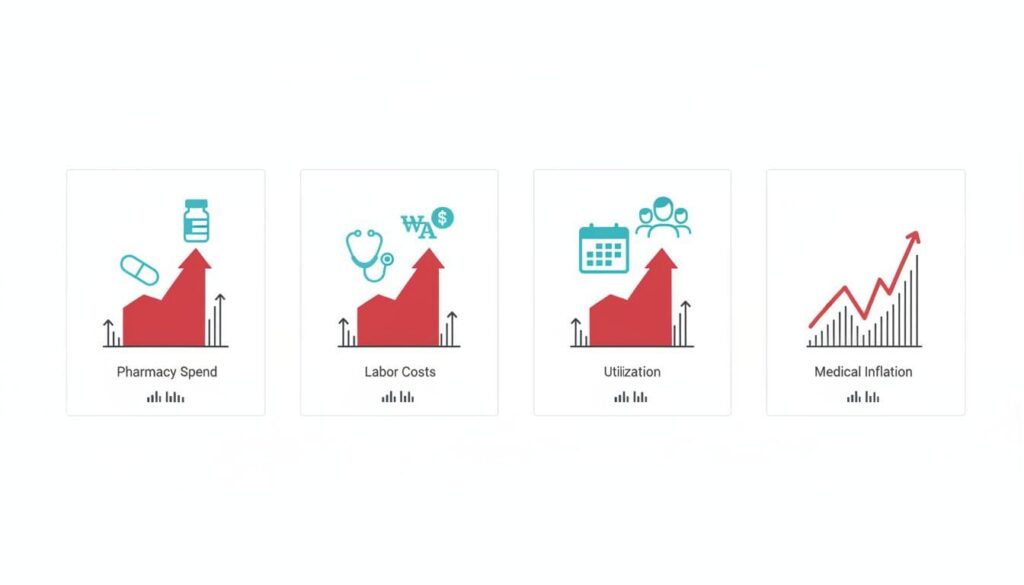
This quick view shows where the pressure is coming from:
| Cost driver | What is happening | Why employers feel it |
|---|---|---|
| Prescription drugs | GLP-1s and specialty meds are rising fast | Higher plan spend, larger high-cost claims |
| Provider labor | Hospitals and health systems face staffing shortages | Providers pass higher labor costs into rates |
| Medical inflation | Care costs keep rising faster than many budgets | Premium and claim trend stay elevated |
| Higher utilization | More visits, imaging, surgeries, and mental health use | Total claim volume increases |
| Chronic conditions | Diabetes, obesity, cancer, heart disease, and MSK issues persist | Ongoing care drives repeat spending |
Employers still pay the largest share of coverage costs. Because of that, many are weighing more cost shifting in 2026. That reaction is understandable, but broad cuts often miss the real source of waste.
Why passing more costs to employees often backfires #
Moving more cost to employees can look clean on a spreadsheet. In practice, it often creates a mess.
When premiums, deductibles, or copays climb too fast, employees delay care. They skip follow-up visits, put off imaging, or stop filling prescriptions. A 2023 Health System Tracker snapshot showed a family of four with private coverage paid $6,296 in premiums and $3,564 out of pocket. Those numbers have only moved in one direction since then.
The effect goes beyond the claim line. Affordability shapes how supported employees feel. If the plan feels harder to use every year, satisfaction drops. Then engagement falls, turnover risk rises, and trust in leadership weakens.
Cost-control fails when employees avoid the care that keeps bigger claims from happening later.
This is where business and people strategy meet. A plan that looks cheaper upfront can cost more through poor Adherence, lower productivity, and weaker retention.
What leaders should measure before making plan changes #
Better decisions start with better visibility. Before changing Plan Design, leaders should review claims trend, pharmacy trend, high-cost claimants, chronic condition patterns, site of care use, and preventive care rates.
That review should also include employee feedback. HR may hear that workers don’t understand the HSA. Finance may see a sharp jump in Specialty Drug spend. The C-suite may care most about turnover, workforce stability, and long-Term ROR, not just next quarter’s Premium.
JA’s point of view is useful here: data should be clear enough to guide action, not buried in rows of spreadsheet noise. Benchmarking matters because context matters. A 9% increase means one thing if your plan is already inefficient, and something else if your plan is rich, competitive, and valued by employees.
For a stronger read on plan position, custom mid-market benefits benchmarking data can help leaders compare design, contribution strategy, and trend in a way that’s easier to use.
Build a benefits strategy that lowers waste, not value #
The strongest benefits strategies don’t start with cuts. They start with waste.
That means asking better questions. Are people using the wrong site of care? Is pharmacy contracting working? Are chronic conditions getting support early enough? Is Plan Design helping employees choose wisely, or pushing them into confusion? Good cost-control protects value while trimming avoidable spend.
Use Plan Design to give employees choice without creating confusion #
A thoughtful mix of medical plans can help different employee groups choose coverage that fits their life and budget. Many larger employers now offer three or more plan options, often with a high-Deductible plan, a traditional PPO, and a richer buy-up option.
Choice works when differences are easy to understand. It breaks down when employees face a wall of jargon and guess.
A younger employee may want lower payroll deductions and an HSA. A parent with regular pediatric visits may prefer steadier copays. An employee managing a chronic condition may need predictable drug costs more than a lower Premium. Plan Design should reflect those real trade-offs.
Clear design also supports fairness. Employees don’t all use care the same way, so one plan for everyone can create frustration. Still, more options do not help if the enrollment experience is muddy. Employers get better outcomes when they pair choice with simple comparisons, plain-language education, and Decision Support.
For more on employee-centered plan thinking, see JA’s guidance on matching benefits design to workforce needs.
Target high-cost areas like pharmacy and chronic conditions #
Pharmacy deserves special attention because it is rising faster than many medical categories. A broad annual renewal response won’t fix that. Focused review might.
Employers can look at Formulary strategy, Specialty Drug management, biosimilar adoption, prior authorization standards, site-of-care rules, and PBM contract terms. Those are not abstract finance issues. They shape what an employee pays at the pharmacy counter and whether treatment stays on track.
Targeted clinical support matters too. Chronic conditions drive a large share of plan spend, especially diabetes, obesity, heart disease, cancer, and musculoskeletal issues. Early support can reduce avoidable ER visits, admissions, and complications.
JA has published useful reads on both strategies to manage high-cost specialty pharmaceuticals and cost-effective diabetes management for employers. The common lesson is simple: targeted action beats across-the-board cuts.
Protect employee satisfaction with better communication and support #
Even a smart plan can disappoint employees if they don’t understand it. That gap is expensive.
Employees make dozens of benefits decisions each year. They choose plans, compare care settings, decide whether to use virtual care, weigh generic versus brand drugs, and judge whether a bill looks right. If the message is unclear, people don’t use the plan well.
Help employees become smarter healthcare consumers #
Education should be plain, short, and timed to the decision at hand. Open Enrollment is one moment, but it can’t be the only one.
Employees need clear guidance on plan selection, preventive care, In-Network use, virtual visits, Urgent Care versus the ER, and how HSAs work. They also need reminders during the year, because most people don’t remember benefits details until a child gets sick or a bill arrives.
This is where communication creates real cost-control. If employees know where to go for care, they avoid unnecessary high-cost settings. If they understand preventive care, they are more likely to use it. If they know what the HSA can do, they may feel less anxious about a high-Deductible plan.
People can’t use what they don’t understand, and they can’t value what they can’t see.
Pair cost-control with advocacy and human support #
Benefits decisions affect households, not only budgets. A denied claim can hit a family during cancer treatment. A confusing bill can land when a baby is due. A poor network decision can disrupt care for an injured worker.
That is why navigation and advocacy matter. Member support can help employees find In-Network providers, resolve billing issues, understand prior authorization, and coordinate care for ongoing needs. For complex claims, human help matters more than a portal link.
Support also improves trust. When employees feel that someone is in their corner, satisfaction rises even during a hard year for costs. That has real value for retention and culture. It also improves ROR, because employees remember who helped when it counted.
Make cost-control a long-Term process, not a once-a-year fix #
Annual renewal meetings still matter, but they are too late to do the full job. Sustainable cost-control takes a repeatable process.
Strong employers listen first. Then they assess claims and feedback, build a plan, communicate it well, carry it out, and review outcomes. That cycle keeps leadership from reacting to one bad renewal month or one loud trend headline.
Year-round planning also improves accountability. If pharmacy costs spike in March, you can respond in June. If enrollment confusion shows up in October, you can fix communication before January claims start rolling in. JA has long stressed the value of planning ahead, and its advice on early strategies for predictable benefits budgeting fits that approach.
What a balanced healthcare strategy looks like over time #
A healthier long-Term model is steady, not flashy. It benchmarks the plan regularly, reviews measurable outcomes, adjusts design with care, and keeps employee education active all year.
Leaders should track both financial and workforce measures. Cost trend matters. So do retention, employee feedback, preventive care use, chronic condition engagement, and where members get care. If deductibles are lower but satisfaction tanks, that story is incomplete. If spend levels off and utilization improves, that is a stronger sign of progress.
The goal is not perfect stability. Healthcare won’t offer that. The goal is a strategy that learns, adapts, and protects the employee experience while keeping the budget grounded in reality.
Employers don’t have to choose between managing rising healthcare costs and supporting their people. The better answer is a disciplined plan that uses clear data, focused plan changes, strong communication, and year-round review.
That approach protects more than the budget. It protects trust, retention, and the daily experience employees carry home to their families. In a year when every cost decision feels heavier, that balance is where meaningful outcomes begin.


